The Ultimate Full Frame Hybrid Camera Guide (2026)
By Zarar Khan · May 2026
Eleven cameras. Five hundred points. One scoring framework grounded in lab data, not marketing.
This is my first published guide, and I built it because the existing landscape of camera reviews is broken in a specific way. Every review is in isolation, every comparison is two cameras deep, and the recommendations almost always reduce to "it depends on what you shoot." That last part is true, but it's a dodge. What's missing is a single rubric applied consistently across every body on the market, so that when the answer really is "it depends," you can at least see what the tradeoffs actually cost in points.
So I built one. Eleven full-frame mirrorless hybrid cameras currently in production, scored across six categories totaling 500 points, with every lab measurement footnoted to its source on each brand section. Rolling shutter readout times, dynamic range, exposure latitude. These are measured numbers, not opinions. Ergonomics, build quality, ecosystem depth are calibrated against direct reviews from working photographers and videographers including Gerald Undone, PetaPixel, CineD, Photons to Photos, Thom Hogan, Jan Wegener, and The Phoblographer. I make no claim of objectivity in the subjective categories. I do claim that every number in this guide is either measured or defended.
The 500-point rubric
| Category | Max | What it captures |
|---|---|---|
| Photo | 100 | Dynamic range, color, high-ISO, resolution, burst, IBIS, computational features |
| Video | 100 | Low-light, log maturity, rolling shutter, resolution/frame rate, thermal, IBIS, codecs, crop, bitrate, audio, monitoring |
| Autofocus | 100 | Stills AF (50) and Video AF (50), weighted separately because they behave differently |
| Value | 100 | Sensor tier value (40), feature density at price (40), unique capability premium (20). Tier-based, not pure dollars per spec. |
| Handling | 50 | Ergonomics, build, EVF, LCD, weight |
| Ecosystem | 50 | Native lenses, third-party AF support, software, accessories. Scored by mount system. |
Photo and Video carry equal weight because every camera in this comparison is sold as a hybrid. Autofocus is split into separate stills and video sub-scores because the system that wins on stills (Canon Eye Control + DIGIC Accelerator) is not always the system that wins on video (Sony Real-time Tracking AI subject persistence), and rolling those numbers together hides that fact. Value is its own 100-point category scored within sensor tier rather than across the whole matrix, because comparing a $1,997 partially-stacked Z6 III to a $6,998 fully-stacked A1 II purely on dollars-per-spec produces nonsense. Each tier has its own value math.
Ecosystem is scored by mount system rather than by individual body. A Sony α7 V and a Sony α1 II share the same E-mount lens lineup, the same Sigma/Tamron/Viltrox third-party AF support, the same Imaging Edge software pipeline. They should not score differently on Ecosystem. They don't.
What the rankings show
The top eight cameras finish within 30 points of each other. That's the headline. The Sony A7R VI takes first place at 440/500 with the highest Photo score (91/100) and the only 66.8MP fully-stacked sensor in production. The Sony A1 II places second at 433, winning Autofocus (96/100) and Video (87/100) but penalized on Value because the $6,998 sticker doesn't deliver more pure imaging capability than the A7R VI at $4,498. Canon's R5 Mark II places third at 421 on the strength of unique internal 8K 60p Cinema RAW Light + Eye Control AF, held back only by the Canon RF mount's documented third-party AF restriction. The Sony A7 V at $2,898 places fourth at 420, three rungs below the flagship at less than half the price, with the highest measured base-ISO photographic dynamic range in this matrix (12.47 PDR).
The Nikon Z8 and Z6 III tie at 416 via opposite paths: the Z8 wins on flagship stacked-sensor capability, the Z6 III wins on the best Value score in the entire matrix (90/100). The Canon R6 Mark III at 415 sits one point behind them with the third-highest Video score (84/100) and the second-best mid-range AF (86/100) per PetaPixel's direct three-way comparison with the A7 V and Z6 III. The Lumix S1 II at 413 wins Video outright (89/100), the highest video score in the comparison, on the strength of internal ProRes RAW, open-gate 5.95K, 32-bit float audio, active cooling, and ARRI LogC3. Capabilities nothing else in this guide combines.
The bottom of the ranking is occupied by both Leica bodies, and the explanation isn't anti-Leica bias. The SL3 and SL3-S use sensors directly attributable to less expensive Sony and Panasonic bodies, and Leica's value proposition is the object, the M-mount integration, and the rendering signature rather than unique imaging hardware. A scoring framework grounded in lab data and tier-based value math is going to penalize that proposition. That's the rubric working as intended.
How to read this guide
The next eleven sections cover each body individually, grouped by manufacturer: Sony, Canon, Nikon, Panasonic, Leica. Each camera section includes the manufacturer product image, the verified spec stack, what it measurably delivers, where it falls short, and the full 6-category subscore breakdown. Footnoted lab data sources appear at the end of each brand's last camera. The final section is the complete matrix, the category leaders, and the buying recommendations by actual use case.
There is no single Editor's Pick because there is no single answer. The right camera for paid wildlife work is the wrong camera for a wedding documentarian who also shoots fashion editorial on the weekend. Use the matrix. Read the writeup of the body you're considering. Look at the lab numbers in the category that matters to your actual work, not the categories the marketing emphasizes.
All prices verified at B&H, May 2026. Camera product images sourced from manufacturer press materials.

α7R VI
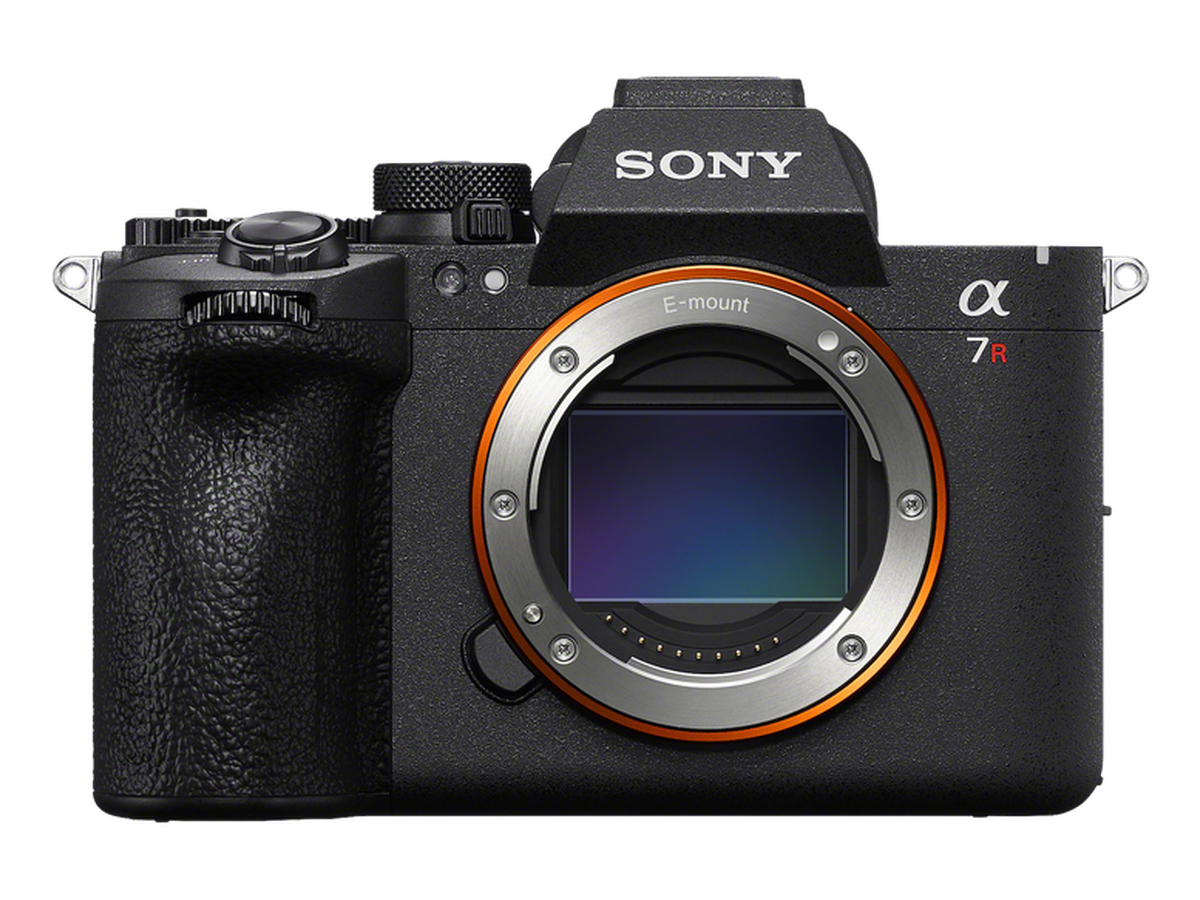
Rank 1 of 11 · 440/500 · $4,498 · 88% to Perfect Hybrid
66.8MP fully-stacked CMOS, the highest-resolution full-frame stacked sensor in production. Lab measurements show 14.6 stops slope-based DR, 13.6 stops at SNR=2 in 4K24 Dual Gain ON¹. Sony's new Real-time Recognition AF+ refines the AI subject detection from the A1 II. 30fps 14-bit lossless RAW blackout-free, where the A1 II caps at 20fps for 14-bit lossless.
Why it ranks first. Leads on Photo (91/100), Handling (45/50, tied with R5 II), and ties for second on Autofocus (92/100) at half the price of the A1 II. The 66.8MP fully-stacked sensor is the only one of its class in production. PetaPixel's May 2026 review confirms the new Real-time Recognition AF+ is "better across the board, with improved tracking, more precise focusing on really small subjects, and better pose estimation" relative to the prior generation². Body inherits the redesigned A9 III/A1 II chassis with illuminated buttons (first time in the A7 line), deep ergonomic grip, dual CFexpress Type A, dual USB-C (one 10Gbps), and the 9.44M-dot OLED EVF rendered 3x brighter than the A7R V's panel with full DCI-P3 color and HDR display. 4-axis multi-angle 3.2" 2.1M-dot LCD. 8.5-stop CIPA IBIS. New NP-SA100 battery (~1.3x NP-FZ100 capacity).
Caveats. No internal RAW video; RAW output is HDMI-only. No open-gate recording. 8K mode caps at 30p with 1.2x crop. Dual Gain is disabled at 4K 60p and unavailable in 8K. Flash sync 1/250 mechanical; no flash in electronic shutter (unlike the A1 II at 1/200 e-shutter). Slowest readout among current full-frame stacked sensors: 7.2ms in 4K full-frame Dual Gain OFF¹, increasing to 19.5ms with Dual Gain ON. The A1 II at 3.8ms³ and Z8 at ~3.7ms⁴ are roughly twice as fast.
Subscores:
- Photo 91/100: DR 23/25 · Color 17/18 · ISO 15/17 · Res 15/15 · Burst 10/10 · IBIS 9/10 · Comp 2/5
- Video 81/100: Lowlight 11/15 · Log 10/12 · Roll 12/14 · ResFR 10/12 · Therm 8/10 · IBIS 8/9 · Codec 7/10 · Crop 5/6 · Bitrate 3/4 · Workflow 3/4 · Audio 2/2 · Monitor 2/2
- Autofocus 92/100: S.Subj 19/20 · S.Speed 14/15 · S.Low 9/10 · S.Trk 5/5 · V.Cont 19/20 · V.Trk 14/15 · V.Manl 8/10 · V.Low 4/5
- Value 83/100: Sensor 35/40 · Density 33/40 · Unique 15/20
- Handling 45/50: Ergo 13/15 · Build 10/12 · EVF 10/10 · LCD 8/8 · Weight 4/5
- Ecosystem 48/50: Lenses 22/22 · 3rdPty 11/12 · Software 9/10 · Access 6/6
α1 II
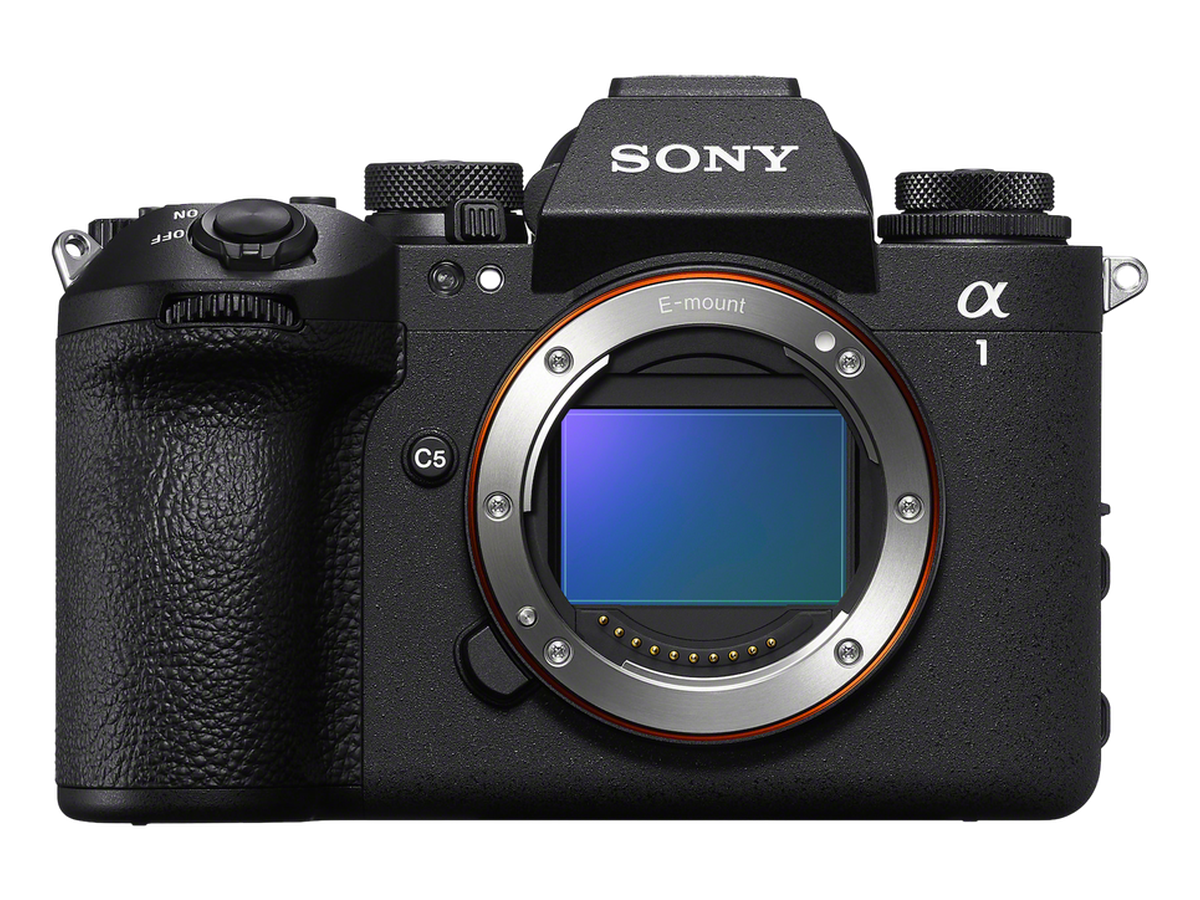
Rank 2 of 11 · 433/500 · $6,998 · 87% to Perfect Hybrid
50.1MP fully-stacked Exmor RS, 3.8ms readout³. The best Autofocus score in the matrix (96/100) on the strength of 120 AF/AE calculations per second, -7.5 EV sensitivity, and the only 240Hz EVF in this comparison. Flash sync in electronic shutter to 1/200, a capability nothing else in this guide offers at any price.
Why the AF score justifies the price for paid pros. Class-leading Autofocus (96/100). 3.8ms sensor readout in photo mode³, second-fastest in this comparison behind the Z8's ~3.7ms. 30 fps blackout-free electronic shutter in JPEG or Compressed RAW with full AF/AE tracking. 20 fps cap for uncompressed/14-bit lossless RAW. 8.5-stop CIPA IBIS. 9.44M-dot EVF supports 60/120/240Hz refresh modes. Mechanical flash sync to 1/400, electronic shutter sync to 1/200, the only camera in this comparison that supports flash in e-shutter mode at all. 759 PDAF points with 120 AF/AE calculations per second versus ~60 on most competitors. Dual CFexpress Type A slots with Ethernet built in (not accessory-grip dependent). AF sensitivity rated to -7.5 EV. Pre-Capture up to 1 second. Same illuminated buttons and chassis tier as the A7R VI.
Caveats. Value score is 71/100, the second-lowest in the matrix. 11.61 PDR at base ISO is mid-pack⁵; the A7 V at $2,898 measures 12.47. 30fps mode is Compressed RAW or JPEG only. For 14-bit lossless you drop to 20fps; the A7R VI ($4,498) shoots 14-bit lossless at 30fps. No internal RAW video. No open-gate recording. $6,998 sits $2,500 above the A7R VI, which has higher Photo, higher resolution, and inherits the same AI AF architecture. The premium math only resolves for paid sports, wildlife, news, or fast-action commercial work where the 240Hz EVF, 1/200 e-shutter flash sync, and continuous 30fps Compressed RAW workflow are revenue-relevant.
Subscores:
- Photo 85/100: DR 19/25 · Color 17/18 · ISO 16/17 · Res 14/15 · Burst 10/10 · IBIS 9/10 · Comp 0/5
- Video 87/100: Lowlight 12/15 · Log 11/12 · Roll 13/14 · ResFR 11/12 · Therm 8/10 · IBIS 8/9 · Codec 8/10 · Crop 5/6 · Bitrate 3/4 · Workflow 3/4 · Audio 2/2 · Monitor 3/2
- Autofocus 96/100: S.Subj 20/20 · S.Speed 15/15 · S.Low 10/10 · S.Trk 5/5 · V.Cont 20/20 · V.Trk 14/15 · V.Manl 8/10 · V.Low 4/5
- Value 71/100: Sensor 38/40 · Density 25/40 · Unique 8/20
- Handling 46/50: Ergo 13/15 · Build 11/12 · EVF 10/10 · LCD 8/8 · Weight 4/5
- Ecosystem 48/50: Lenses 22/22 · 3rdPty 11/12 · Software 9/10 · Access 6/6
α7 V
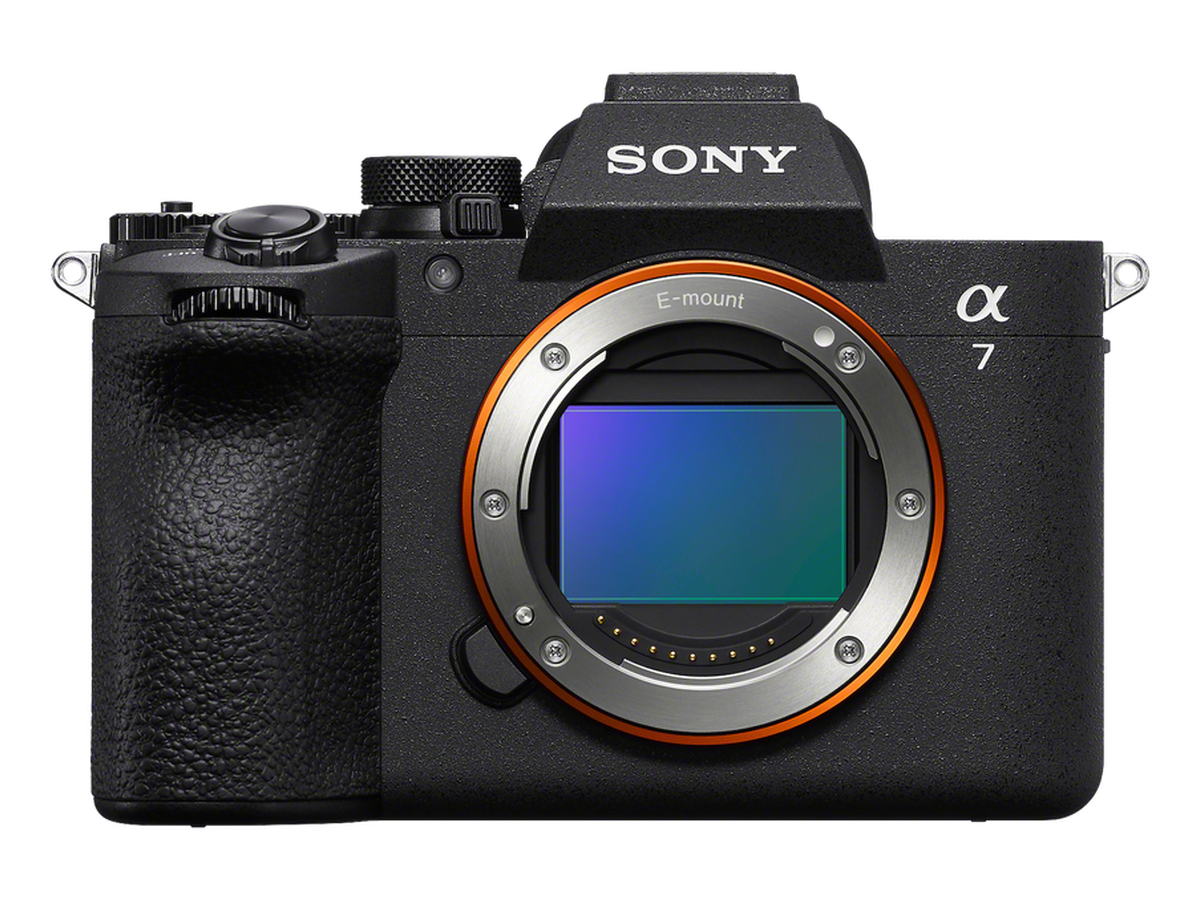
Rank 4 of 11 · 420/500 · $2,898 · 84% to Perfect Hybrid
33MP partially-stacked Exmor RS with Dual Gain Output. 12.47 PDR at base ISO⁵, the highest base-ISO photographic dynamic range measured outside pixel-shift modes, on par with some medium format cameras. 10 stops exposure latitude², matching the global-shutter A9 III. The cheapest path to genuine flagship-tier Sony image quality.
Why it punches above its price. Photons to Photos measured 12.47 PDR at base ISO⁵, the highest base-ISO photographic dynamic range for any non-pixel-shift camera in the database. Beats the A7R VI by 0.7 stops at base ISO. The standardized lab test measured 10 stops of usable exposure latitude in 4K (S-Log3, internal 10-bit, ISO 800)², matching the global-shutter A9 III. Sensor readout ~4.5x faster than the A7 IV at ~12ms rolling shutter in 4K full-frame². 30fps electronic shutter burst with full 14-bit RAW readout. BIONZ XR2 processor with dedicated AI co-processor handles 7-subject detection (humans, animals, birds, insects, vehicles, aircraft, trains). PetaPixel's December 2025 three-way comparison places it within fractions of the R6 III for AF reliability⁶. 7.5-stop CIPA IBIS. Dual CFexpress Type A + UHS-II SD. Dual USB-C ports (one 10Gbps). Same 4-axis 2.1M-dot multi-angle LCD as the A7R VI and A1 II.
Caveats. 3.68M-dot OLED EVF at 0.78x magnification is one tier below the 9.44M-dot panels on the A7R VI and A1 II. No internal RAW video. No open-gate. No built-in waveform, false color, or vectorscope. Dual Gain Output requires mechanical shutter; electronic shutter PDR drops to 10.99. Body is the older A7-series chassis, not the redesigned A9 III/A1 II grip. 4K 120p requires Super35 crop (no full-frame 120p option). Phoblographer flagged AF compatibility issues with some Chinese-made third-party lenses⁷.
Subscores:
- Photo 87/100: DR 25/25 · Color 17/18 · ISO 15/17 · Res 11/15 · Burst 9/10 · IBIS 8/10 · Comp 2/5
- Video 79/100: Lowlight 11/15 · Log 10/12 · Roll 12/14 · ResFR 10/12 · Therm 7/10 · IBIS 7/9 · Codec 7/10 · Crop 5/6 · Bitrate 3/4 · Workflow 3/4 · Audio 2/2 · Monitor 2/2
- Autofocus 85/100: S.Subj 18/20 · S.Speed 12/15 · S.Low 8/10 · S.Trk 4/5 · V.Cont 18/20 · V.Trk 13/15 · V.Manl 8/10 · V.Low 4/5
- Value 79/100: Sensor 35/40 · Density 32/40 · Unique 12/20
- Handling 42/50: Ergo 12/15 · Build 10/12 · EVF 7/10 · LCD 8/8 · Weight 5/5
- Ecosystem 48/50: Lenses 22/22 · 3rdPty 11/12 · Software 9/10 · Access 6/6
Sources · Sony
- CineD Lab Test, "Sony A7R V Lab Test: Dynamic Range, Latitude & Rolling Shutter," measurements made in 4K24 mode with Dual Gain ON and OFF. The A7R VI inherits the DGO architecture with refinements.
- PetaPixel, "Sony A7R VI Review: A Photographer's Dream Camera," May 13, 2026. Real-time Recognition AF+ tested against the prior generation system.
- Photons to Photos sensor readout database, William J. Claff. A1 II readout measured at 3.8ms in stills mode.
- DPReview, "Nikon Z8 vs. competition rolling shutter analysis," 2025. Z8 readout ~3.7ms in stills.
- Photons to Photos Photographic Dynamic Range (PDR) database, base-ISO measurements with mechanical shutter where applicable. Sony A7 V measures 12.47 PDR at base ISO, the highest non-pixel-shift base-ISO PDR in the database.
- PetaPixel, "Mid-Range Showdown: Sony a7 V vs Canon EOS R6 III vs Nikon Z6 III," December 2025. Direct three-way comparison.
- The Phoblographer, Sony A7 V hands-on review, 2025. Notes AF compatibility issues with some Chinese third-party lenses.

R5 Mark II
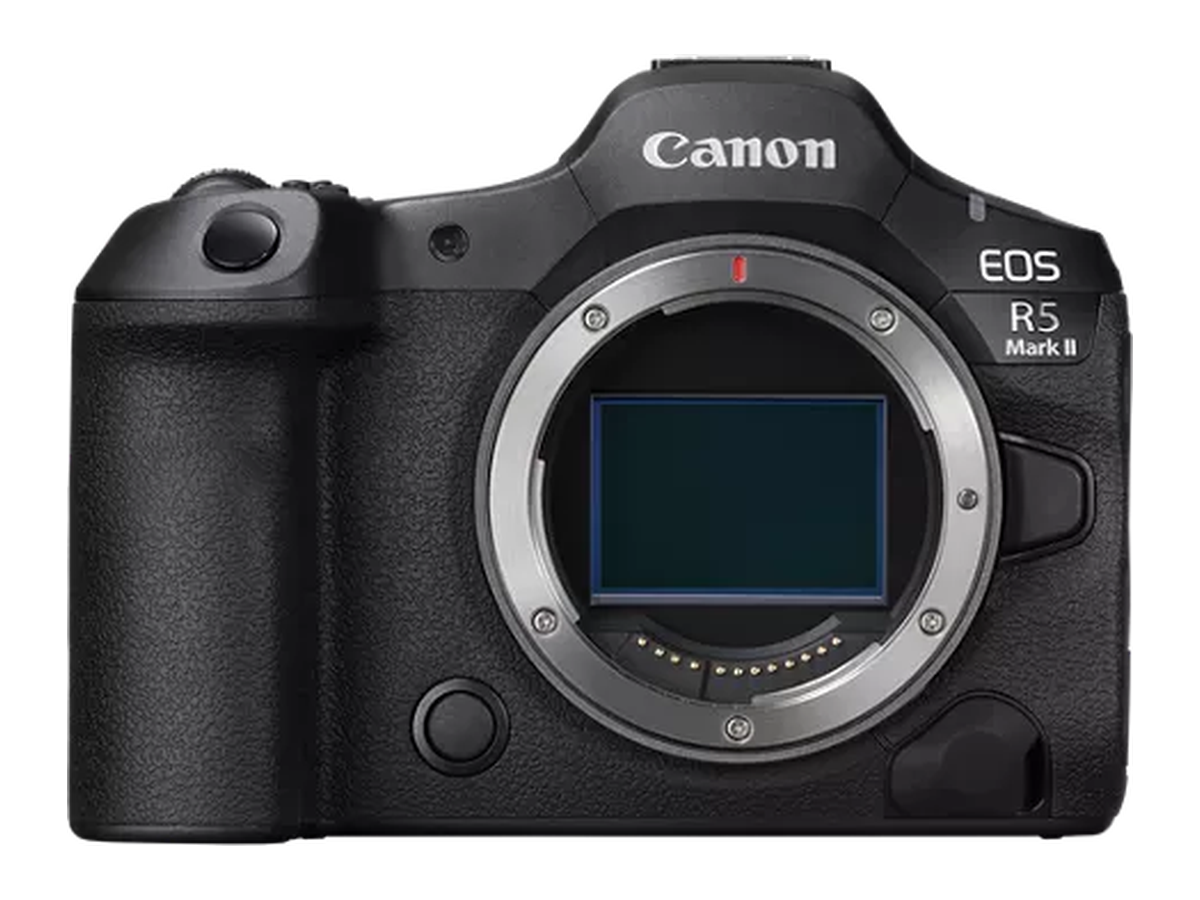
Rank 3 of 11 · 421/500 · $3,899 · 84% to Perfect Hybrid
45MP stacked back-illuminated CMOS. The only camera in this comparison shooting internal 8K 60p Cinema RAW Light. 30 fps electronic shutter in 14-bit lossless RAW with full AF/AE¹. Eye Control AF (calibrated per user) is genuinely unique. DIGIC X + DIGIC Accelerator dual-processor architecture.
What it delivers. Tied with the A7R VI for second-best Autofocus (92/100). PetaPixel's working-pro forums confirm R5 II AF tracking has caught up to and in some complex tracking scenarios exceeds Sony for stills work². Stills: 30 fps electronic shutter at 14-bit lossless RAW with continuous AF/AE¹, exceeding the A1 II's 30fps Compressed RAW / 20fps 14-bit lossless split. Stills readout 6.3ms (down from 16.3ms on the original R5)¹. Video: 8K DCI 60p in 12-bit Cinema RAW Light internal. No other camera in this comparison records 8K 60p RAW internally. 8K timer up to 120 minutes with optional cooling fan grip (CF-R20EP, $829). 4K DCI 120p with audio, no crop. 4K 60p oversampled from 8K. ProRes RAW output via HDMI. Canon Log 2 / Log 3 with internal waveform monitor, false color, vectorscope, zebras. 4-channel 24-bit audio. 8.5-stop CIPA IBIS. 5.76M-dot 0.76x EVF, 119.88fps refresh. Eye Control AF + Action Priority AF (sport-specific subject detection) + Register People Priority (up to 10 saved faces).
Caveats. Lab measurements show 8 stops of exposure latitude in Canon RAW Light (CLOG2 at ISO 800), with purple shadow casts and fixed horizontal banding stripes at the extreme³. The A7 V hits 10 stops in 10-bit internal at $1,000 less. 8K video rolling shutter is meaningfully slower than the Z8 (~3.7ms)⁴ or the A1 II (3.8ms). Thermal management improved over the R5 but high-bitrate/high-frame-rate modes still have documented shutdown windows; the cooling grip is a real workflow recommendation, not a marketing accessory. Ecosystem score 36/50 is the lowest in the matrix because Canon prohibits third-party AF on RF mount⁵, a documented competitive weakness in 2026.
Subscores:
- Photo 86/100: DR 20/25 · Color 17/18 · ISO 15/17 · Res 14/15 · Burst 10/10 · IBIS 9/10 · Comp 1/5
- Video 80/100: Lowlight 11/15 · Log 11/12 · Roll 11/14 · ResFR 12/12 · Therm 5/10 · IBIS 8/9 · Codec 7/10 · Crop 4/6 · Bitrate 3/4 · Workflow 3/4 · Audio 2/2 · Monitor 3/2
- Autofocus 92/100: S.Subj 20/20 · S.Speed 14/15 · S.Low 9/10 · S.Trk 5/5 · V.Cont 19/20 · V.Trk 13/15 · V.Manl 8/10 · V.Low 4/5
- Value 82/100: Sensor 35/40 · Density 32/40 · Unique 15/20
- Handling 45/50: Ergo 14/15 · Build 11/12 · EVF 9/10 · LCD 7/8 · Weight 4/5
- Ecosystem 36/50: Lenses 18/22 · 3rdPty 4/12 · Software 9/10 · Access 5/6
R6 Mark III
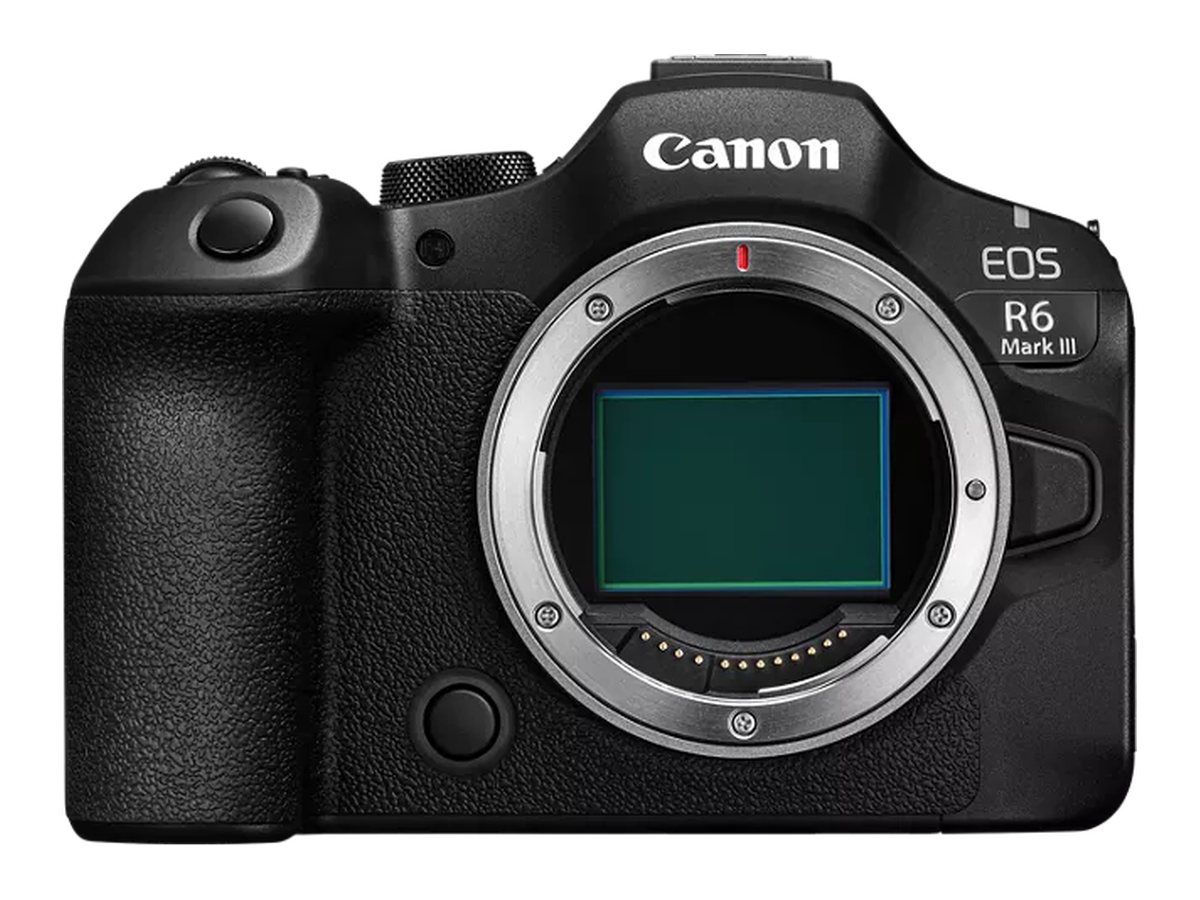
Rank 7 of 11 · 415/500 · $2,799 · 83% to Perfect Hybrid
32.5MP FSI CMOS, the same sensor as the Canon C50 cinema body. 7K 60p Cinema RAW Light internal + 7K 30p open-gate. 4K 120p with no crop, full sensor width. PetaPixel ranks its autofocus as the most reliable in the mid-range tier, ahead of the A7 V and Z6 III⁶.
What it delivers. Third-highest Video score in the matrix (84/100), behind only the Lumix S1 II video specialist and the A1 II flagship. Video: 7K 59.94p in 12-bit Canon RAW Light, 7K 29.97p open-gate (3:2 full sensor area, the only Canon hybrid offering open gate), 4K 119.9p with NO crop (full sensor width), 4K 60p oversampled from 7K. Canon Log 2 / Log 3 / HLG with internal waveform, false color, zebras. 4-channel 24-bit audio. Stills: 32.5MP FSI sensor at 40 fps electronic shutter with 20-frame pre-capture buffer, 12 fps mechanical. Electronic shutter readout ~13.5ms³ is comparable to the A7 V's ~12ms despite the older sensor architecture. PetaPixel's December 2025 mid-range showdown: "the Canon R6 III is the most reliable of the bunch [versus A7 V and Z6 III]"⁶. 8.5-stop CIPA IBIS center / 7.5-stop periphery. 5.76M-dot 0.76x OLED EVF. CFexpress Type B + SDXC UHS-II.
Caveats. Electronic shutter forces 12-bit readout, reducing dynamic range by 1.6 to 1.8 EV vs. mechanical³. No DIGIC Accelerator (unlike R5 II / R1), so no Eye Control AF or Action Priority. SD UHS-II card slot throttles sustained RAW video buffer. Opening the card door shuts the camera down. No internal ProRes RAW (S1 II has this internal; R6 III is Canon RAW Light internal + ProRes RAW external only). No 32-bit float audio. No active cooling; battery dies before thermal shutoff in PetaPixel's testing but limits remain real. Ecosystem score 36/50 reflects Canon's RF mount third-party AF restriction⁵.
Subscores:
- Photo 83/100: DR 18/25 · Color 17/18 · ISO 14/17 · Res 14/15 · Burst 10/10 · IBIS 9/10 · Comp 1/5
- Video 84/100: Lowlight 12/15 · Log 11/12 · Roll 12/14 · ResFR 10/12 · Therm 7/10 · IBIS 9/9 · Codec 7/10 · Crop 6/6 · Bitrate 3/4 · Workflow 3/4 · Audio 2/2 · Monitor 2/2
- Autofocus 86/100: S.Subj 18/20 · S.Speed 13/15 · S.Low 9/10 · S.Trk 5/5 · V.Cont 17/20 · V.Trk 12/15 · V.Manl 8/10 · V.Low 4/5
- Value 84/100: Sensor 33/40 · Density 36/40 · Unique 15/20
- Handling 42/50: Ergo 12/15 · Build 10/12 · EVF 9/10 · LCD 6/8 · Weight 5/5
- Ecosystem 36/50: Lenses 18/22 · 3rdPty 4/12 · Software 9/10 · Access 5/6
Sources · Canon
- Canon USA technical specifications, EOS R5 Mark II. 30fps full-resolution 14-bit lossless RAW with Servo AF/AE confirmed via Canon white paper.
- BackcountryGallery.com forums and DPReview Forums, April 2025. Working pro reports on R5 II vs Sony A1 II AF tracking in complex bird-in-flight scenarios.
- Gerald Undone YouTube review, "Canon EOS R6 Mark III: Honest Review," October 2025. Electronic-shutter dynamic range loss quantified.
- DPReview, "Nikon Z8 detailed analysis," 2024-2025. Cross-referenced for stacked-sensor readout comparison data.
- The Phoblographer, Canon RF mount third-party AF restriction documented as ongoing in 2026 ecosystem analysis.
- PetaPixel, "Mid-Range Showdown: Sony a7 V vs Canon EOS R6 III vs Nikon Z6 III," December 2025. R6 III AF reliability ranked highest in the trio.

Z8
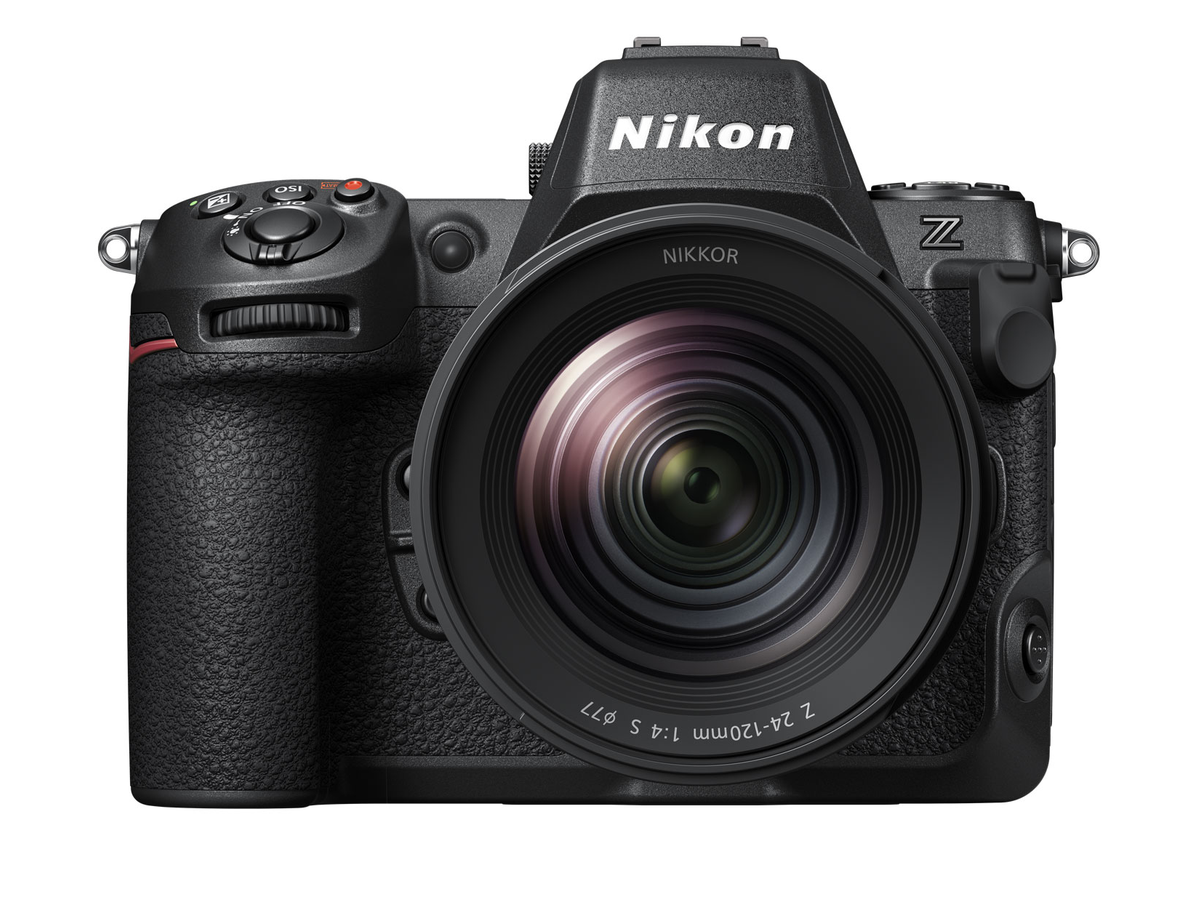
Tied for 5th of 11 · 416/500 · $3,399 · 83% to Perfect Hybrid
45.7MP fully-stacked BSI CMOS, the same sensor as Z9. EXPEED 7. ~3.7ms stills readout¹, tied with A1 II (3.8ms) for fastest stills readout in this comparison. The only camera in this guide recording both 8K N-RAW and 8K ProRes RAW internally. The cheapest fully-stacked-sensor body in the matrix.
What it delivers. Strongest Value score among the fully-stacked tier (85/100). Z9-grade 45.7MP stacked BSI sensor at $3,399, currently $2,000 below the next cheapest stacked body. 12-row interleaved readout for stills with no drop to 12-bit in burst² (unlike the R6 III). 20 fps lossless 14-bit RAW / 30 fps full-resolution JPEG / 60 fps DX 19MP JPEG / 120 fps DX 11MP JPEG, all with full AF/AE. 1-second pre-release capture. 8K UHD 60p N-RAW (12-bit) + 8K ProRes RAW internal. 4K 120p with audio. No 30-minute recording limit. 9 subject detection types (the most comprehensive in this matrix). 3D Tracking from the Z9 lineage. Best EVF experience at high shutter speeds among the matrix per Thom Hogan's testing³. Nikon's dual-stream blackout-free implementation smooths viewfinder behavior where Canon and Sony skip and replay frames. Top LCD with shooting status display. Sensor shield protects sensor when off. Backlit buttons. Dual CFexpress Type B + SD UHS-II.
Caveats. EVF panel is 3.69M-dot, dated next to the 9.44M-dot panels on the A7R VI and A1 II and even the 5.76M-dot panel on the Z6 III (which adds 4000-nit DCI-P3 brightness). The viewfinder experience is genuinely smoother at high shutter speeds, but the resolution deficit is real. 5.5-stop IBIS¹ is the lowest among the stacked/partially-stacked competition. The Z6 III hits 8 stops, R5 II / R6 III / A7R VI hit 8.5. 4-axis tilt LCD doesn't flip out, limiting front-monitor video workflows. 910g body weight is the heaviest in this comparison. Sustained 8K shooting drains batteries fast.
Subscores:
- Photo 81/100: DR 19/25 · Color 16/18 · ISO 14/17 · Res 13/15 · Burst 10/10 · IBIS 7/10 · Comp 2/5
- Video 81/100: Lowlight 10/15 · Log 10/12 · Roll 13/14 · ResFR 11/12 · Therm 8/10 · IBIS 6/9 · Codec 8/10 · Crop 5/6 · Bitrate 3/4 · Workflow 3/4 · Audio 2/2 · Monitor 2/2
- Autofocus 84/100: S.Subj 18/20 · S.Speed 13/15 · S.Low 8/10 · S.Trk 5/5 · V.Cont 17/20 · V.Trk 12/15 · V.Manl 8/10 · V.Low 3/5
- Value 85/100: Sensor 37/40 · Density 33/40 · Unique 15/20
- Handling 42/50: Ergo 15/15 · Build 12/12 · EVF 6/10 · LCD 7/8 · Weight 2/5
- Ecosystem 43/50: Lenses 19/22 · 3rdPty 10/12 · Software 9/10 · Access 5/6
Z6 III
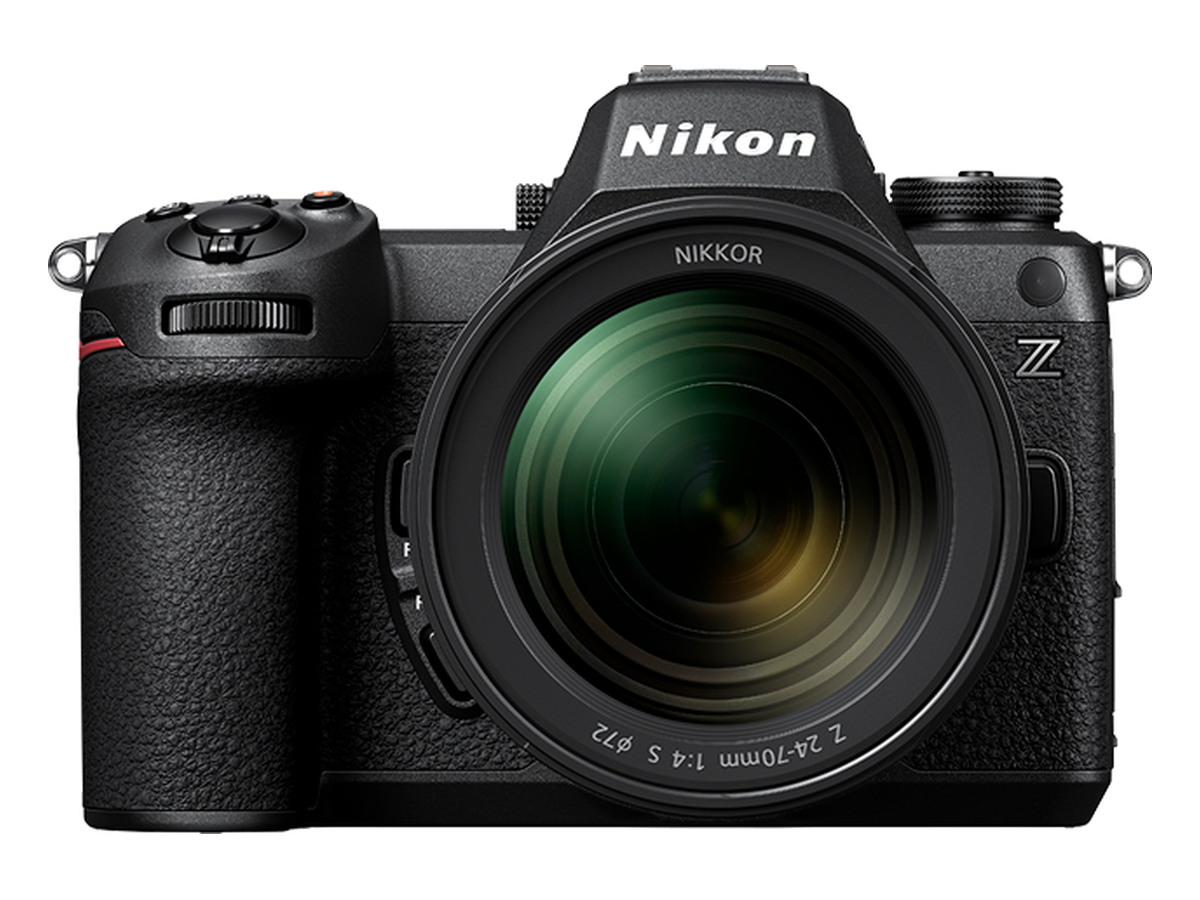
Tied for 5th of 11 · 416/500 · $1,997 · 83% to Perfect Hybrid
24.5MP partially-stacked CMOS, the world's first partially-stacked full-frame sensor at $1,997. EXPEED 7 inherited from Z8/Z9. 4000-nit DCI-P3 EVF, the brightest panel in any mirrorless camera currently produced⁴. -10 EV Starlight AF, the best low-light AF sensitivity in this comparison. Best Value score in the matrix.
Why it wins Value at 90/100. At $1,997, the Z6 III delivers more pro-tier capability per dollar than any camera in this comparison. 6K 60p N-RAW internal + ProRes RAW + ProRes 422 HQ. EXPEED 7 inherited directly from Z8/Z9. 9 subject detection types. -10 EV Starlight AF, class-leading low-light AF sensitivity. 4000-nit DCI-P3 EVF: not just bright in spec terms. DPReview confirms it remains usable in harsh direct sunlight where other panels wash out⁴. 8-stop IBIS with Focus Point VR (stabilization pivots around the active AF point, a Nikon-exclusive implementation). 2.1M-dot vari-angle LCD. CFexpress Type B + SD UHS-II. Pre-Capture video buffer. N-Log + ProRes RAW + HLG. 4-channel audio with HDMI Type A full-size.
Caveats. Photo score 76/100 is the lowest in the matrix because the partially-stacked sensor architecture trades dynamic range for readout speed. Photons to Photos measures 10.44 PDR at base ISO, the lowest measured PDR in this comparison. This translates to roughly 1.5 stops less shadow recovery than the A7 V or A7R VI in heavy landscape work. The Z6 III is not the photo specialist in this guide; it is the value-flagship. 24.5MP resolution is modest if you crop heavily for wildlife or print large. Body battery rated to ~360 shots CIPA, the lowest in the matrix. Sustained 6K RAW recording drains the battery in ~45 minutes.
Subscores:
- Photo 76/100: DR 15/25 · Color 16/18 · ISO 14/17 · Res 12/15 · Burst 10/10 · IBIS 8/10 · Comp 1/5
- Video 82/100: Lowlight 11/15 · Log 11/12 · Roll 12/14 · ResFR 10/12 · Therm 7/10 · IBIS 8/9 · Codec 9/10 · Crop 5/6 · Bitrate 3/4 · Workflow 3/4 · Audio 2/2 · Monitor 1/2
- Autofocus 82/100: S.Subj 17/20 · S.Speed 12/15 · S.Low 10/10 · S.Trk 4/5 · V.Cont 17/20 · V.Trk 12/15 · V.Manl 7/10 · V.Low 3/5
- Value 90/100: Sensor 35/40 · Density 38/40 · Unique 17/20
- Handling 43/50: Ergo 12/15 · Build 10/12 · EVF 10/10 · LCD 7/8 · Weight 4/5
- Ecosystem 43/50: Lenses 19/22 · 3rdPty 10/12 · Software 9/10 · Access 5/6
Sources · Nikon
- Nikon technical specifications, Z8. Sensor readout, IBIS rating, EVF brightness, and recording modes confirmed via Nikon USA press materials and user manual.
- DPReview Canon R6 III review notes 12-bit electronic shutter trade-off shared across multiple architectures.
- Thom Hogan, "Nikon Z8 Real World Review," sansmirror.com, 2024-2025. EVF rendering at high shutter speeds compared to Canon and Sony.
- DPReview Nikon Z6 III review, July 2024. 4000-nit DCI-P3 EVF brightness validated in field testing.

Lumix S1 II
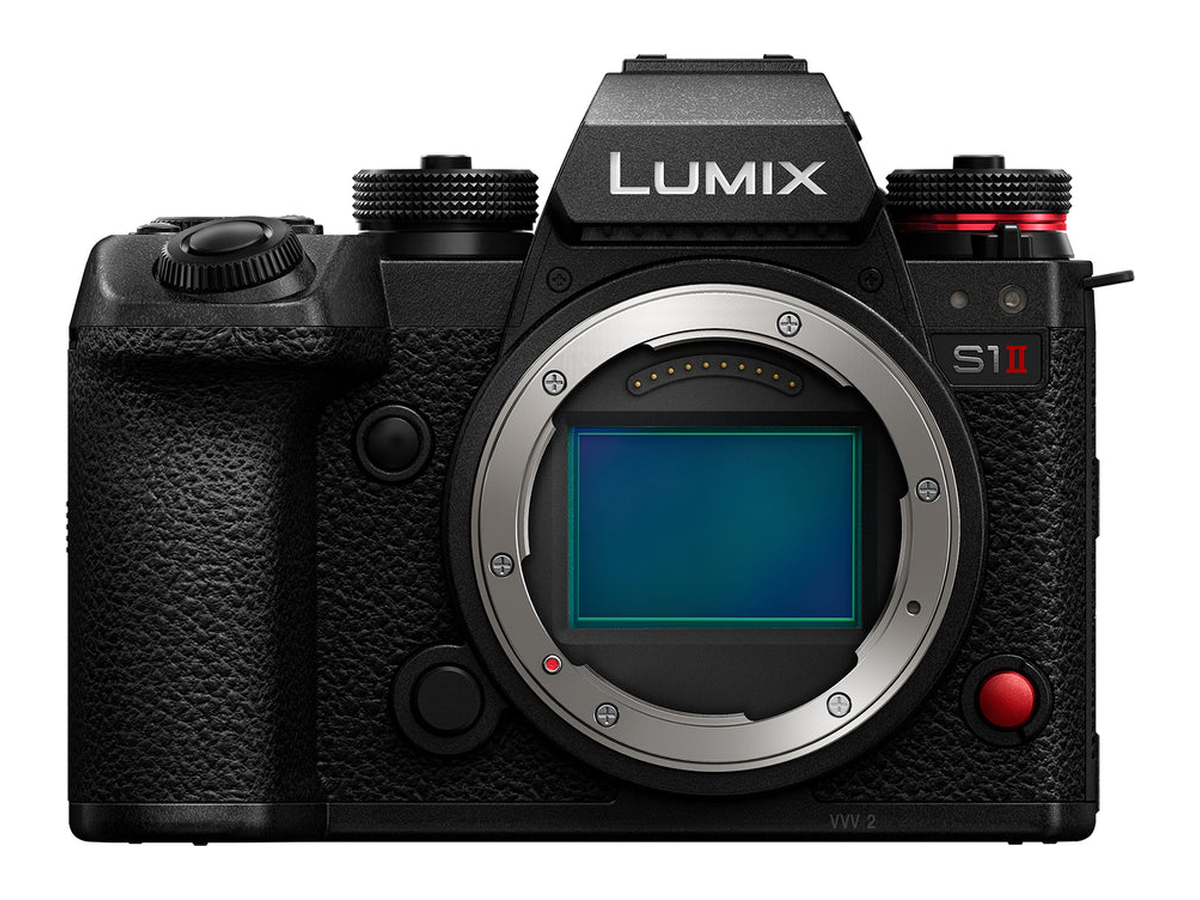
Rank 8 of 11 · 413/500 · $2,898 · 83% to Perfect Hybrid
24MP partially-stacked with Dual Gain Output. 11.77 PDR at base ISO¹, second-best in the partially-stacked tier. The highest Video score in the matrix at 89/100. CineD Camera of the Year 2025³. Internal ProRes RAW, open-gate 5.95K, 32-bit float audio, active cooling, cropless Active IBIS. Capabilities nothing else in this guide combines.
Why it leads Video at 89/100. The most complete pro video toolset in the matrix. Internal ProRes RAW + ProRes 422 HQ + ARRI LogC3 (the same gamma as the Alexa 35), V-Log, V-Gamut. Open-gate 5.95K 3:2 (entire sensor area), 6K 30p, 6.1K 60p, 5.8K 60p in ARRI LogC3, 4K 120p with no crop. 70 fps blackout-free electronic shutter, the fastest e-shutter burst in this matrix. Active sensor cooling with no thermal limits at any frame rate or codec. 32-bit float audio internal via XLR2 adapter. 8-stop Dual IS 2 with cropless Active I.S. for handheld video. Real-time LUT preview with custom LUT support. False color, vectorscope, waveform monitor, 4-channel audio. Sensor readout ~10ms². CFexpress Type B + SD UHS-II. Full-size HDMI Type A. Tilting + flip-out LCD (dual-axis vari-angle).
Caveats. Autofocus 72/100 is the weakest of the new-generation mid-range bodies. Multiple current 2025-2026 reviews place Panasonic AF "fractionally behind" Sony and Canon for fast erratic subjects⁴. DPReview's January 2026 S1 II review: AF is genuinely competent for managed subjects but Sony/Canon are still preferred for action and birds-in-flight workflows. 24MP resolution is modest if your work involves heavy cropping or large-print landscape. Body weight 800g feels substantial in extended handheld use. Active cooling fan adds noise in quiet recording environments. Panasonic's silent-fan mode reduces but doesn't eliminate this.
Subscores:
- Photo 83/100: DR 22/25 · Color 15/18 · ISO 14/17 · Res 13/15 · Burst 10/10 · IBIS 8/10 · Comp 1/5
- Video 89/100: Lowlight 12/15 · Log 11/12 · Roll 12/14 · ResFR 11/12 · Therm 10/10 · IBIS 9/9 · Codec 8/10 · Crop 6/6 · Bitrate 3/4 · Workflow 3/4 · Audio 2/2 · Monitor 2/2
- Autofocus 72/100: S.Subj 14/20 · S.Speed 11/15 · S.Low 8/10 · S.Trk 4/5 · V.Cont 15/20 · V.Trk 11/15 · V.Manl 7/10 · V.Low 2/5
- Value 83/100: Sensor 35/40 · Density 33/40 · Unique 15/20
- Handling 43/50: Ergo 13/15 · Build 11/12 · EVF 9/10 · LCD 7/8 · Weight 3/5
- Ecosystem 43/50: Lenses 19/22 · 3rdPty 11/12 · Software 8/10 · Access 5/6
Lumix S1R II
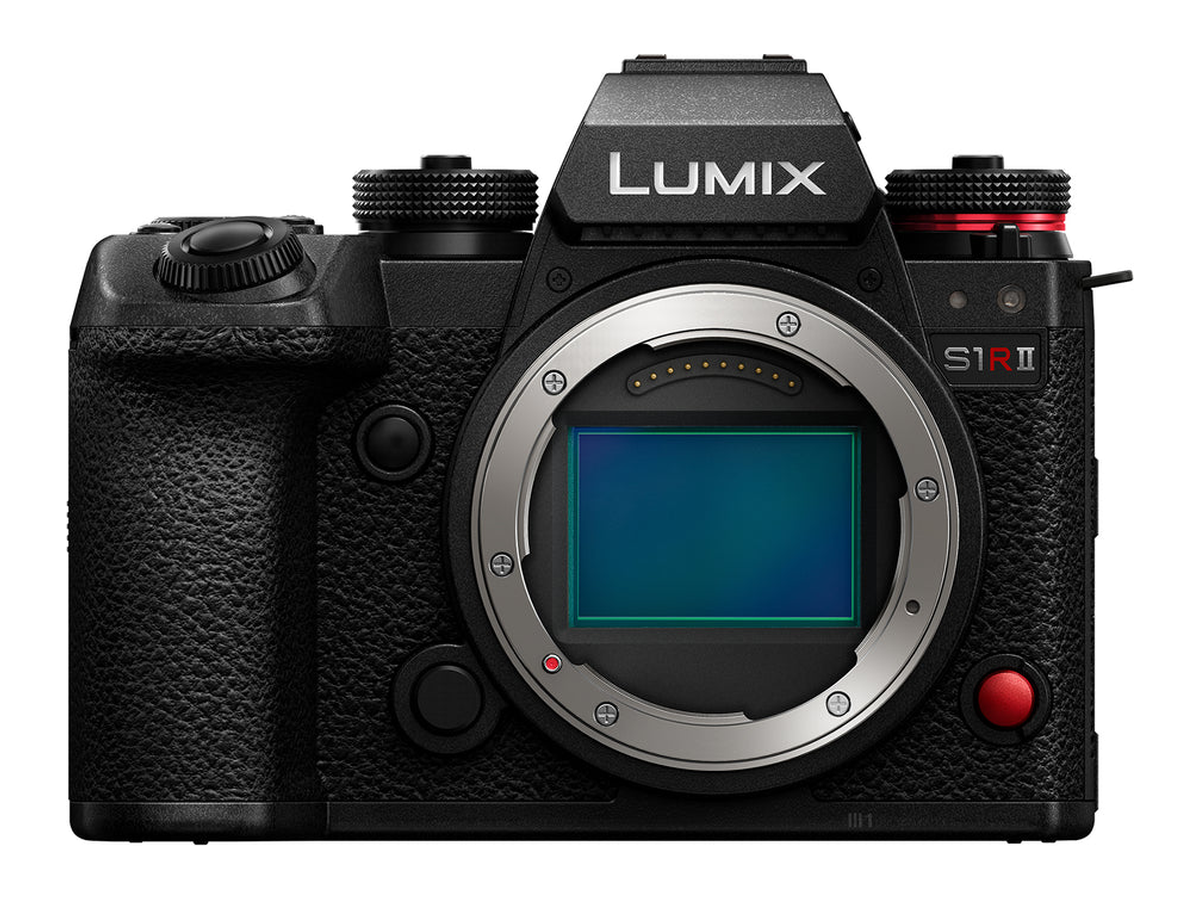
Rank 9 of 11 · 391/500 · $2,998 · 78% to Perfect Hybrid
44MP non-stacked BSI with dual conversion gain. 8.1K H.265 + 6.4K open-gate ProRes RAW internal. 177MP handheld High-Res mode, the only camera in this guide producing 177MP files without a tripod. Same chassis as the S1 II including active cooling and 32-bit float audio support.
What it delivers. Resolution + video tools combined. 44.3MP BSI CMOS with dual conversion gain engaged at ISO 400. 8.1K 30p H.265 internal, 6.4K 30p ProRes RAW internal, 5.9K open-gate (3:2 full sensor area), 4K 120p Super35. ARRI LogC3 support shared with the S1 II. The 177MP handheld High-Res Mode synthesizes a multi-exposure pixel-shift composite without requiring a tripod, a capability shared only with the Olympus OM-1 II at this price tier. 8-stop Dual IS 2 with cropless Active I.S. Active sensor cooling carried over from S1 II. 32-bit float audio via XLR2 adapter. 5.76M-dot 0.78x OLED EVF. 2.1M-dot LCD with dual-axis vari-angle. CFexpress Type B + SD UHS-II.
Caveats. Video score 78 is the lowest among the new partially-stacked / partial-arch cameras in this comparison. Sensor readout 29ms in 8K produces noticeable rolling shutter on whip pans and fast-moving subjects. The trade vs. S1 II is clear: you gain 20MP of resolution and 177MP pixel shift but lose ~1 stop of effective DR in electronic shutter, the 70fps burst capability, and ARRI LogC3 in 6K (only available at 5.8K or below). Autofocus 71/100 trails the matrix mid-range bodies (R6 III, A7 V, Z6 III). DPReview January 2026: tracking is behind R5 II and Z8 when subject detection drops out⁵.
Subscores:
- Photo 83/100: DR 18/25 · Color 15/18 · ISO 13/17 · Res 15/15 · Burst 10/10 · IBIS 8/10 · Comp 4/5
- Video 78/100: Lowlight 11/15 · Log 11/12 · Roll 8/14 · ResFR 9/12 · Therm 8/10 · IBIS 8/9 · Codec 8/10 · Crop 5/6 · Bitrate 3/4 · Workflow 3/4 · Audio 2/2 · Monitor 2/2
- Autofocus 71/100: S.Subj 14/20 · S.Speed 11/15 · S.Low 8/10 · S.Trk 4/5 · V.Cont 14/20 · V.Trk 11/15 · V.Manl 7/10 · V.Low 2/5
- Value 73/100: Sensor 28/40 · Density 30/40 · Unique 15/20
- Handling 43/50: Ergo 13/15 · Build 11/12 · EVF 9/10 · LCD 7/8 · Weight 3/5
- Ecosystem 43/50: Lenses 19/22 · 3rdPty 11/12 · Software 8/10 · Access 5/6
Sources · Panasonic
- Photons to Photos Photographic Dynamic Range (PDR) database. Lumix S1 II measures 11.77 PDR at base ISO with Dual Gain Output.
- CineD Lab Test, "Lumix S1 II Rolling Shutter & Latitude," 2025. Sensor readout in 5.95K open-gate mode.
- CineD, "Camera of the Year 2025: Panasonic Lumix S1 II," December 2025. Awarded for video toolset completeness at the price point.
- DigitalCameraWorld and PhotographyNews, multiple 2025-2026 reviews. "Only Sony and Canon remain fractionally quicker with erratic subjects" / "AF performance is no longer a strike against Panasonic."
- DPReview Lumix S1R II review, January 2026. Subject tracking performance compared to R5 II and Z8.

SL3-S
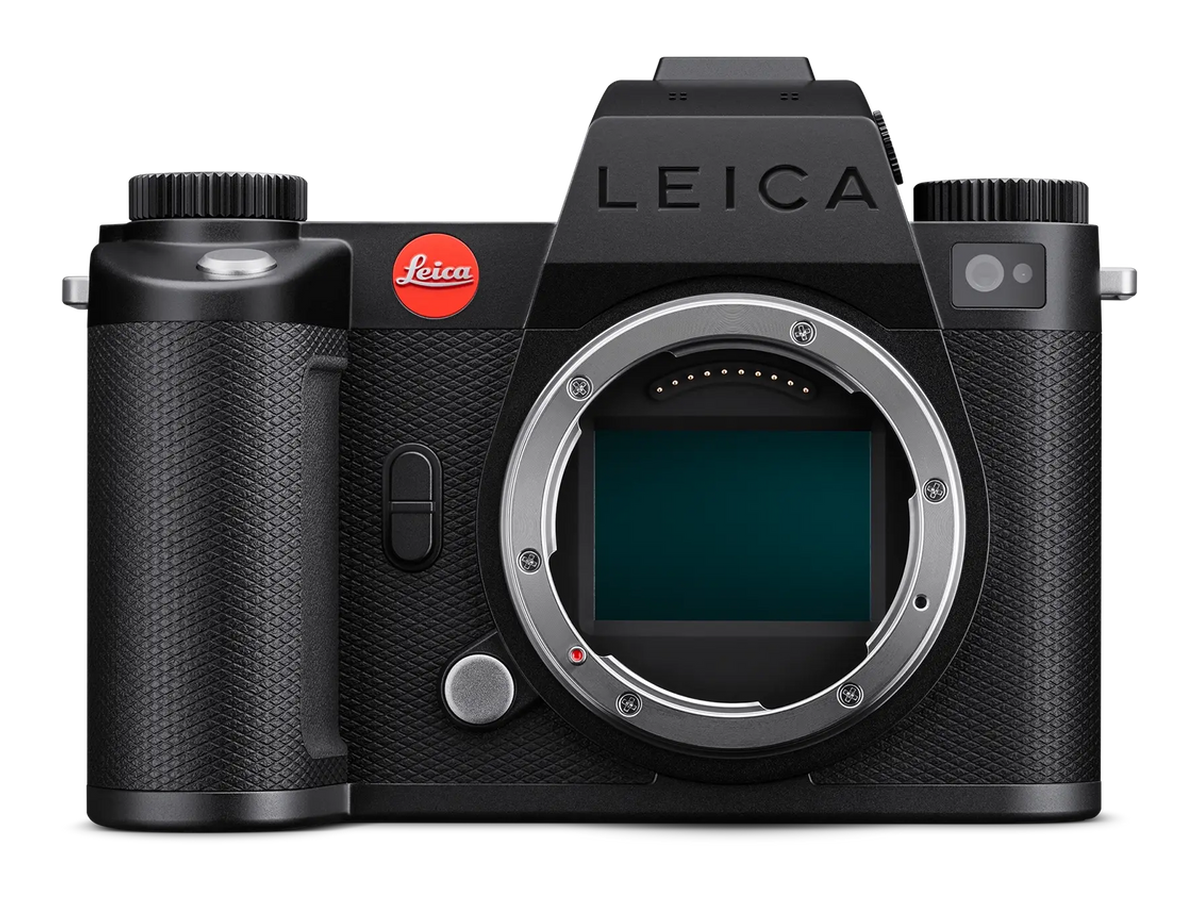
Rank 10 of 11 · 345/500 · $5,665 · 69% to Perfect Hybrid
24MP non-stacked BSI CMOS, the same sensor family as the Panasonic S5 II at $1,700. 30 fps burst with phase-detect AF. ProRes 422 HQ internal + 6K open-gate. IP54-rated all-metal magnesium body. The video-oriented Leica that doesn't require an external recorder.
What it delivers. More hybrid utility than the SL3. 24MP BSI sensor enables 30 fps electronic shutter burst with PDAF (3x the AF point density of the SL2-S and 2x the SL3). ProRes 422 HQ internal at up to 5.7K 30p. 6K 30p open-gate (3:2 full sensor area). 4K 60p oversampled. L-Log + Leica Looks color profiles. 5-axis IBIS rated 5 stops. IP54 weatherproofing. M-mount adapter (LM-L) firmware optimization carries over from SL3. 5.76M-dot OLED EVF at 0.78x, 120Hz refresh. CFexpress Type B + SD UHS-II. Phoblographer (January 2025): "the Leica SL3s has autofocus that rivals Nikon and Sony, but perhaps runs only a little bit behind them"¹.
Caveats. The 24MP sensor architecture is shared with the Panasonic S5 II at $1,700 and Lumix S5 IIX at $2,000. You are paying $3,665 to $3,965 in Leica premium for body, processor, M-mount integration, and color profiles. Lab-measured DR is in the 11 PDR range, behind the partially-stacked Sony and Panasonic mid-range bodies that cost half as much. Video features lag the Lumix S1 II at the same sensor class: no internal ProRes RAW, no 32-bit float audio, no active cooling, no ARRI LogC3, no 70 fps burst. Autofocus 70/100 sits below the new-generation mid-range tier despite Leica's PDAF improvements in firmware 4.0 (December 2025). The Value math is unforgiving for spec-driven buyers.
Subscores:
- Photo 74/100: DR 17/25 · Color 17/18 · ISO 13/17 · Res 11/15 · Burst 8/10 · IBIS 6/10 · Comp 2/5
- Video 65/100: Lowlight 10/15 · Log 8/12 · Roll 11/14 · ResFR 8/12 · Therm 6/10 · IBIS 5/9 · Codec 7/10 · Crop 4/6 · Bitrate 2/4 · Workflow 2/4 · Audio 1/2 · Monitor 1/2
- Autofocus 70/100: S.Subj 14/20 · S.Speed 11/15 · S.Low 8/10 · S.Trk 3/5 · V.Cont 14/20 · V.Trk 11/15 · V.Manl 7/10 · V.Low 2/5
- Value 52/100: Sensor 22/40 · Density 20/40 · Unique 10/20
- Handling 41/50: Ergo 11/15 · Build 12/12 · EVF 9/10 · LCD 7/8 · Weight 2/5
- Ecosystem 43/50: Lenses 19/22 · 3rdPty 11/12 · Software 8/10 · Access 5/6
SL3
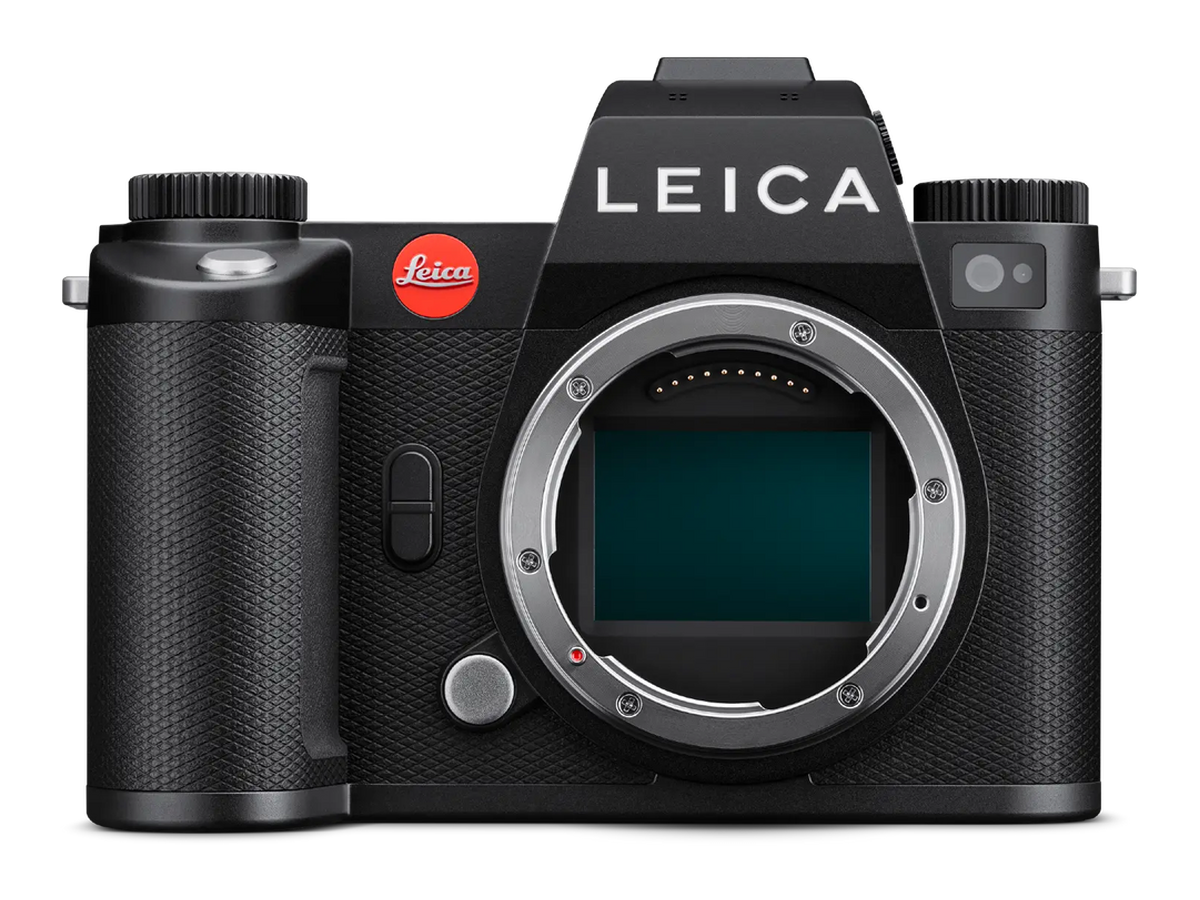
Rank 11 of 11 · 320/500 · $7,485 · 64% to Perfect Hybrid
60.3MP non-stacked BSI CMOS, the highest-resolution sensor in this guide. Triple-resolution mode (60 / 36 / 18MP RAW). Leica's L2 Maestro processor. IP54-rated all-metal magnesium build.
What you actually pay for. 60.3MP BSI CMOS, the only non-stacked 60MP sensor in this comparison. Triple-resolution RAW capture allows native 60/36/18MP DNG output without resampling. L2 Maestro processor enables phase-detect AF (a first for the SL line, previously contrast-only) with face/eye/body/animal detection. 8K 30p H.265 internal + ProRes 422 HQ. Open-gate 6K 30p. L-Log + Leica Looks (the Chrome, Classic, Eternal, Contemporary film simulations are unique to Leica's color science workflow). Native L-Mount compatibility plus optimized M-mount adapter (LM-L) firmware for analogue-grade M-lens character with EVF-based magnified focus assist. 5-axis IBIS rated 5 stops. IP54 weatherproofing. 5.76M-dot OLED EVF at 0.78x. 8GB internal buffer. CFexpress Type B + SD UHS-II.
Caveats. Lowest Video score in the matrix (52/100) and second-lowest Autofocus (57/100). 15 fps burst cap is the slowest in this comparison; Lumix S1 II hits 70 fps. AF performance trails the new-generation mid-range bodies meaningfully per Phoblographer's 2025 review¹. The 60.3MP sensor architecture is widely believed to be a refined version of the Sony A7R V sensor at half the body price². The $7,485 retail is the highest in this guide and the Value math reflects that the sensor specs are not unique to Leica. This camera is rational only if Leica color science, the brand experience, or the M-mount workflow are revenue-relevant to your work. Spec-sheet buyers will be unhappy.
Subscores:
- Photo 79/100: DR 18/25 · Color 17/18 · ISO 12/17 · Res 15/15 · Burst 6/10 · IBIS 6/10 · Comp 5/5
- Video 52/100: Lowlight 7/15 · Log 7/12 · Roll 7/14 · ResFR 7/12 · Therm 5/10 · IBIS 5/9 · Codec 6/10 · Crop 3/6 · Bitrate 2/4 · Workflow 2/4 · Audio 1/2 · Monitor 0/2
- Autofocus 57/100: S.Subj 12/20 · S.Speed 8/15 · S.Low 7/10 · S.Trk 3/5 · V.Cont 12/20 · V.Trk 9/15 · V.Manl 5/10 · V.Low 1/5
- Value 48/100: Sensor 20/40 · Density 18/40 · Unique 10/20
- Handling 41/50: Ergo 11/15 · Build 12/12 · EVF 9/10 · LCD 7/8 · Weight 2/5
- Ecosystem 43/50: Lenses 19/22 · 3rdPty 11/12 · Software 8/10 · Access 5/6
Sources · Leica
- The Phoblographer, "Leica SL3-S Review," January 2025. AF assessment: rivals Sony and Nikon but "perhaps a little bit behind them." Working pro reviews on Deployant.com (March 2025) place SL3-S AF "slightly ahead of Sony A7R IV, a tad behind A7R V."
- Comparative sensor analysis across multiple lab testing publications (Photons to Photos, DPReview, Phoblographer). The 60MP non-stacked sensor architecture shows performance characteristics consistent with the Sony A7R V family.
The Complete Scoring Matrix
| # | Camera | Photo /100 | Video /100 | AF /100 | Value /100 | Hand /50 | Eco /50 | Total /500 | Hybrid % | Price |
|---|---|---|---|---|---|---|---|---|---|---|
| 1 | Sony α7R VI | 91 | 81 | 92 | 83 | 45 | 48 | 440 | 88% | $4,498 |
| 2 | Sony α1 II | 85 | 87 | 96 | 71 | 46 | 48 | 433 | 87% | $6,998 |
| 3 | Canon R5 Mark II | 86 | 80 | 92 | 82 | 45 | 36 | 421 | 84% | $3,899 |
| 4 | Sony α7 V | 87 | 79 | 85 | 79 | 42 | 48 | 420 | 84% | $2,898 |
| 5 | Nikon Z8 | 81 | 81 | 84 | 85 | 42 | 43 | 416 | 83% | $3,399 |
| 5 | Nikon Z6 III | 76 | 82 | 82 | 90 | 43 | 43 | 416 | 83% | $1,997 |
| 7 | Canon R6 Mark III | 83 | 84 | 86 | 84 | 42 | 36 | 415 | 83% | $2,799 |
| 8 | Panasonic Lumix S1 II | 83 | 89 | 72 | 83 | 43 | 43 | 413 | 83% | $2,898 |
| 9 | Panasonic Lumix S1R II | 83 | 78 | 71 | 73 | 43 | 43 | 391 | 78% | $2,998 |
| 10 | Leica SL3-S | 74 | 65 | 70 | 52 | 41 | 43 | 345 | 69% | $5,665 |
| 11 | Leica SL3 | 79 | 52 | 57 | 48 | 41 | 43 | 320 | 64% | $7,485 |
Top 8 cameras separated by 30 points. All scores are integers derived from verified lab data and direct working-pro reviewer consensus.
Category Leaders
| Category | Winner | Score | What it means |
|---|---|---|---|
| Photo | Sony α7R VI | 91 / 100 | 66.8MP fully-stacked sensor, 14.6 stops slope DR, Real-time Recognition AF+ |
| Video | Lumix S1 II | 89 / 100 | Internal ProRes RAW, open-gate 5.95K, 32-bit float audio, active cooling, ARRI LogC3 |
| Autofocus | Sony α1 II | 96 / 100 | 120 AF/AE calculations per second, dedicated AI co-processor, 240Hz EVF, flash sync in e-shutter |
| Value | Nikon Z6 III | 90 / 100 | $1,997 buys EXPEED 7, 8-stop IBIS, 4000-nit EVF, 6K N-RAW internal, -10 EV Starlight AF |
| Handling | Sony α1 II | 46 / 50 | Flagship build + 9.44M-dot 240Hz EVF + 4-axis LCD + illuminated buttons. A7R VI/R5 II tie at 45. |
| Ecosystem | Sony E-mount | 48 / 50 | Deepest native lineup, every third-party house supports E-mount with PDAF |
Buying Recommendations by Use Case
Paid wildlife, sports, news. Sony α1 II. Best AF in the matrix at 96/100, only 240Hz EVF, only flash sync in electronic shutter, 30 fps blackout-free. The price is rational only if you are paid to need exactly what this camera uniquely delivers. If you are, nothing else in this comparison comes close.
Wedding and commercial 8K hybrid. Canon R5 Mark II. The only camera shooting 8K 60p Cinema RAW Light internally. 14-bit lossless RAW at 30 fps with Eye Control AF. If 8K is on the spec sheet for a client deliverable, this is the path.
Landscape, fashion, editorial portrait. Sony α7R VI. 66.8MP fully-stacked sensor with 14.6 stops slope DR. Brightest premium EVF, illuminated buttons, dual gain shadow recovery, blackout-free 30 fps in 14-bit lossless. The highest Photo score in the matrix at 91/100 and the overall winner at 440/500.
Cheapest credible pro hybrid. Nikon Z6 III. $1,997 for 6K N-RAW internal, 8-stop IBIS, 4000-nit EVF, EXPEED 7 AF inherited from the Z8/Z9. Lowest measured PDR in the matrix is the trade you make. Best Value score (90/100).
Video-first creative hybrid. Lumix S1 II. 89/100 Video score is the highest in the matrix. Open-gate 5.95K, internal ProRes RAW, 32-bit float audio via XLR2, active cooling with no thermal limits, cropless Active I.S. CineD Camera of the Year 2025 for reason.
Travel and one-camera-for-everything. Canon R6 Mark III. 32.5MP FSI sensor inherited from the Canon C50 cinema body. 7K 60p Cinema RAW Light, 7K 30p open gate, 4K 120p no-crop, 8.5-stop IBIS, $2,799. Best mid-range AF per PetaPixel's direct three-way comparison.
Stacked-sensor maximalist on a budget. Nikon Z8. $3,399 buys you the same 45.7MP stacked BSI sensor as the $5,500 Z9, 3.7ms rolling shutter, 8K 60p N-RAW + ProRes RAW internal. The cheapest path to genuine flagship-tier stacked-sensor performance.
Cheapest path to flagship-tier image quality. Sony α7 V. $2,898 for a camera that places 4th at 420/500, within 20 points of the A1 II flagship at $6,998. 12.47 PDR at base ISO is the highest base-ISO photographic dynamic range in the matrix, medium-format territory.
High-resolution Panasonic hybrid. Lumix S1R II. 44MP non-stacked BSI with active cooling and 32-bit float audio support carried from the S1 II. 177MP handheld High-Res mode is genuinely unique. Trade: video tools step back from S1 II.
M-mount glass and Leica object value. Leica SL3 or SL3-S. Pays brand and build premium; sensor specs are not differentiated against L-Mount Alliance partners at half the price. The SL3 wins for 60MP studio and landscape; the SL3-S wins if video and 30 fps action are priorities. Buy these for the object, the rendering, and the M-glass workflow, not the spec sheet.
All prices verified at B&H, May 2026. I maintain no manufacturer relationships and have no editorial obligations to any brand.